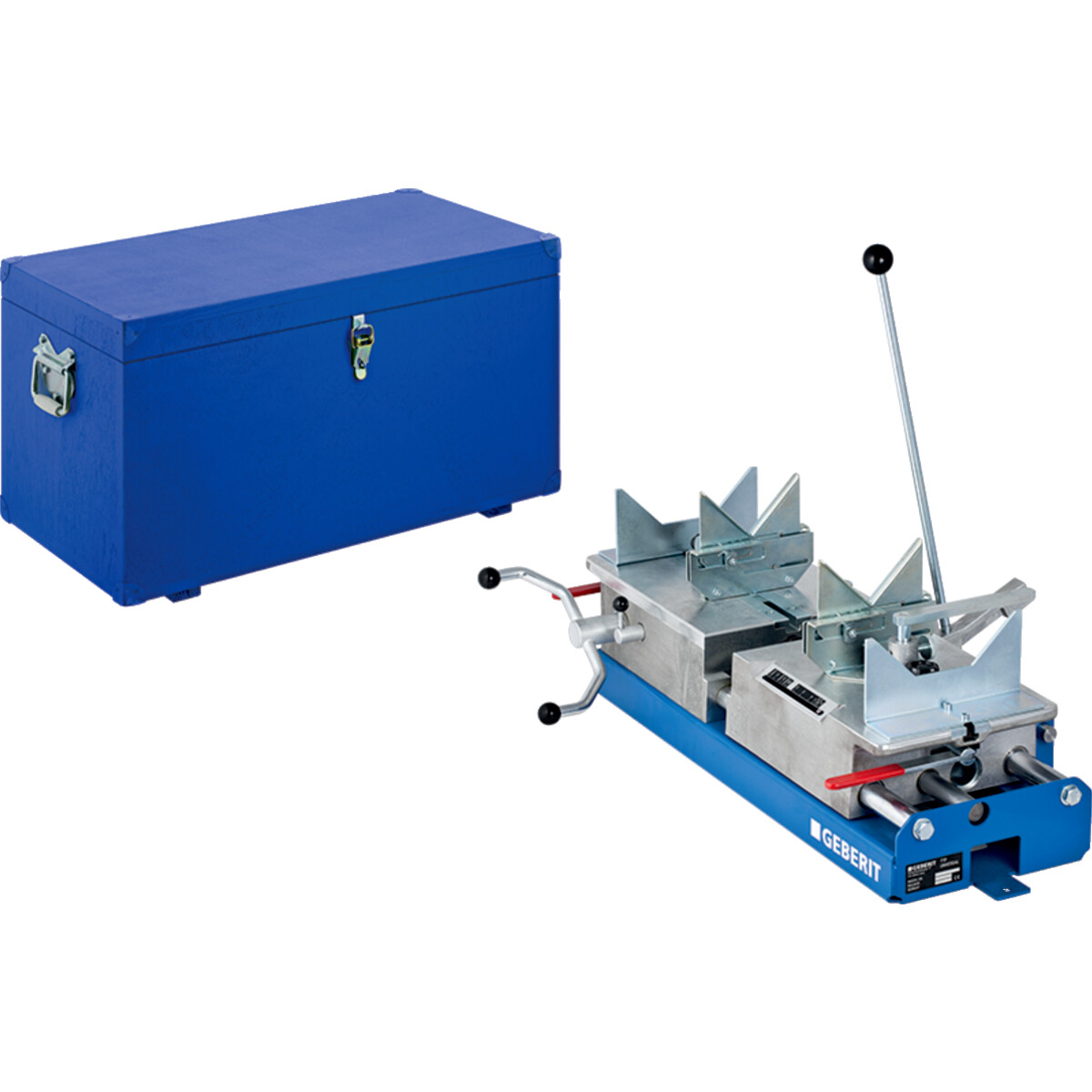
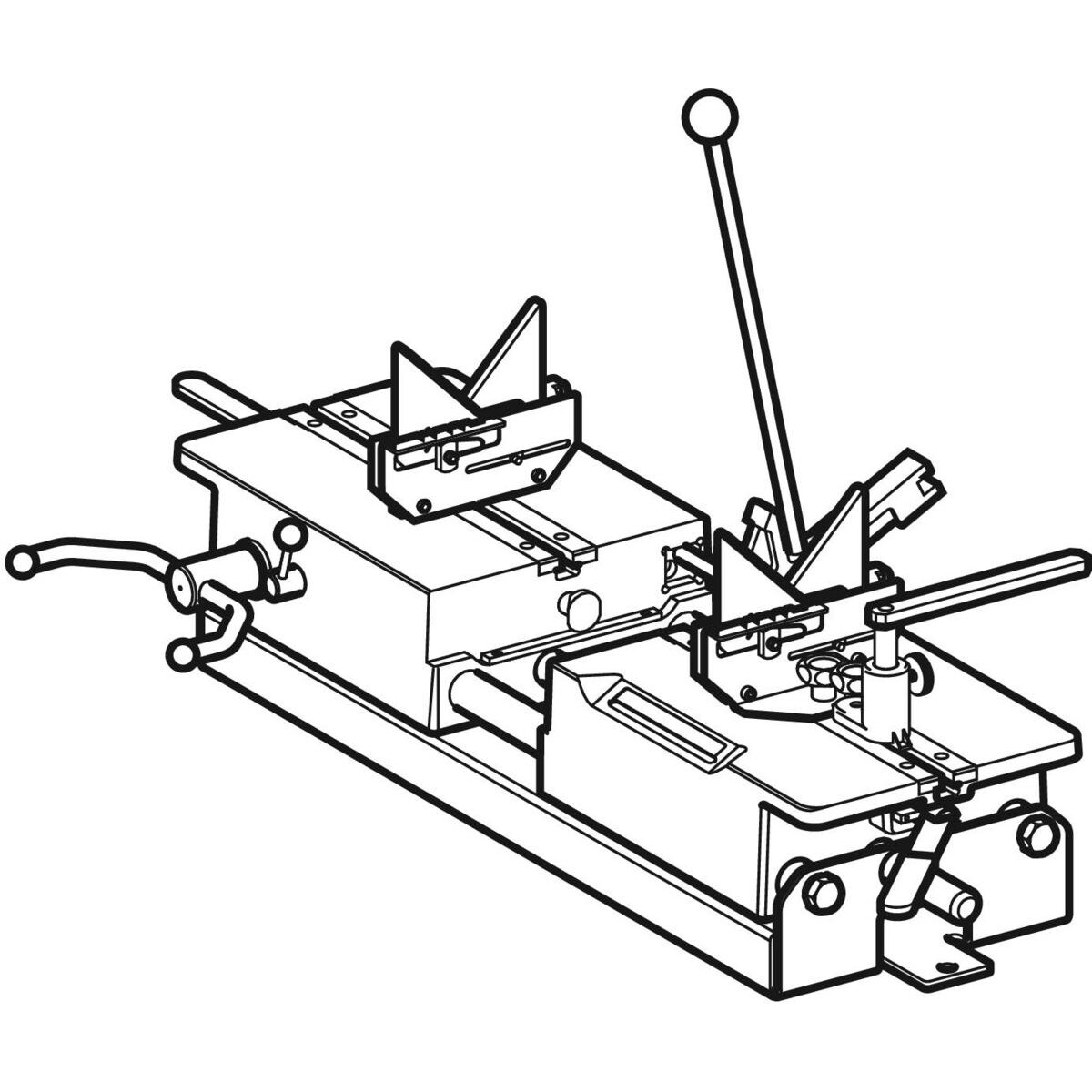
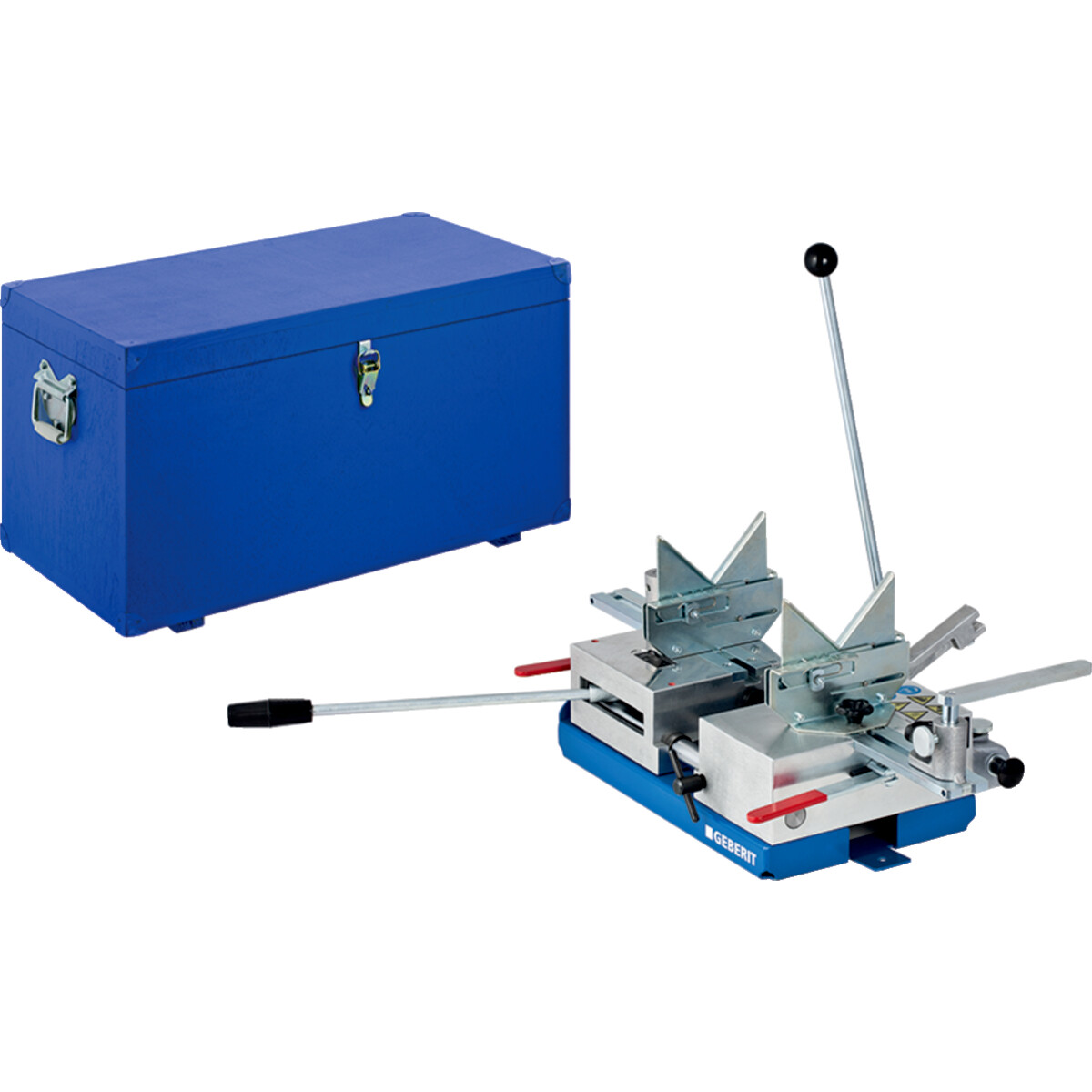
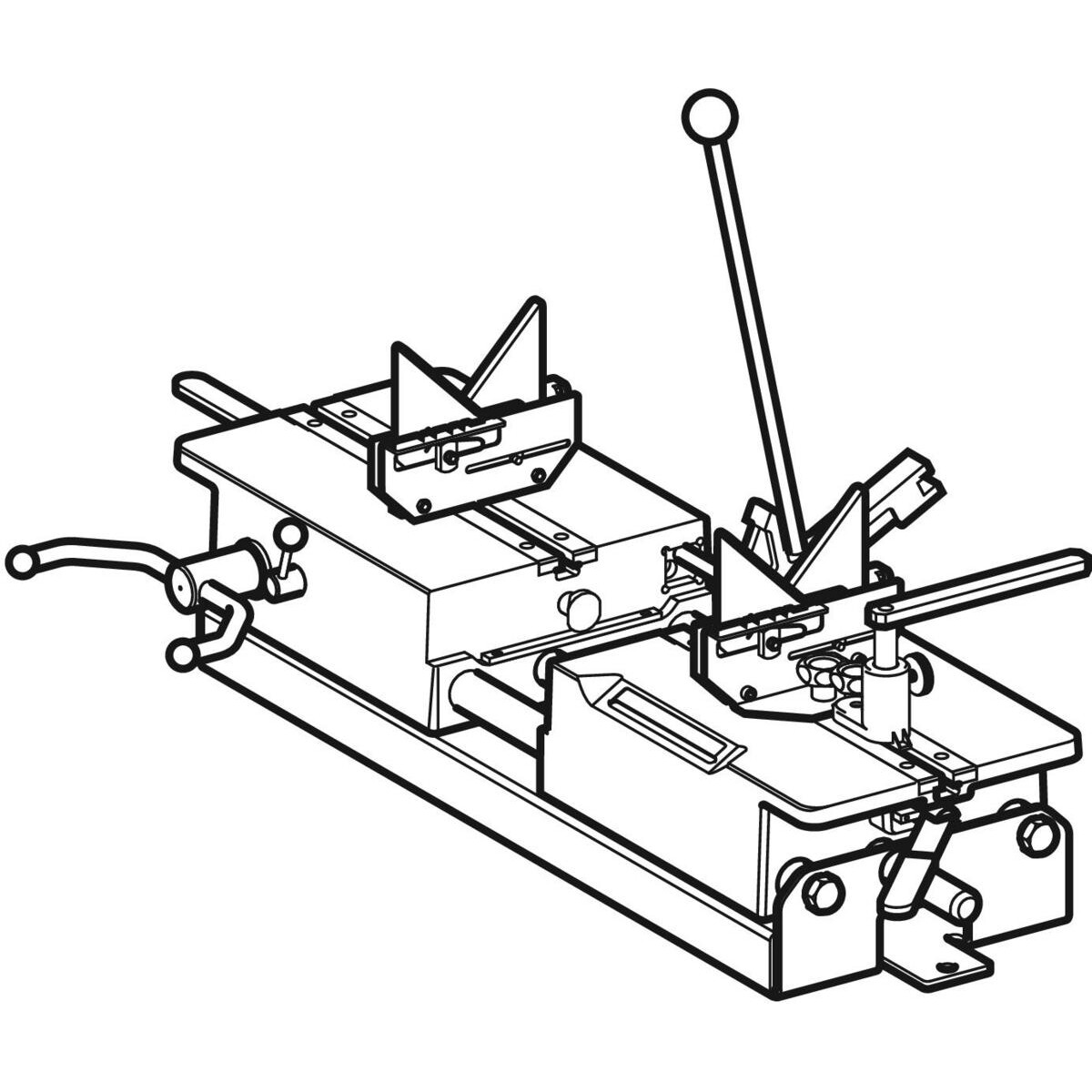
A welding machine for HDPE (high-density polyethylene) is a piece of equipment specifically designed to perform thermal fusion welding on HDPE pipes and fittings. Thermal fusion welding is a commonly used method for joining HDPE pipes securely and leak-proof, creating efficient and durable piping systems. Here is a general description of an HDPE welding machine:
Control Unit: The welding machine is equipped with a control unit that allows the operator to set and monitor welding parameters. These parameters may include temperature, welding time, pressure, etc.
Heating Elements: The heating element is the central component of the welding machine. It is designed to heat the ends of the HDPE pipes and fittings to specific temperatures to fuse them.
Clamping Jaw: A clamping jig is used to hold the pipes and fittings in place during the welding process. This ensures that the weld surfaces remain in contact during fusion. Pressure plate: Some welding machine models are equipped with a pressure plate that applies even pressure to the pipes during fusion. This helps ensure a consistent weld.
Display and controls: The control unit has a display screen that shows the current welding parameters and process status. The controls allow the operator to adjust settings according to project specifications.
Cooling: After fusion, some welding machines are equipped with a cooling system that allows the welded pipes to cool and solidify before being removed from the clamp.
Mounting stand: The welding machine is typically mounted on a stand or frame to keep the equipment stable during use.
Connectivity: Some modern welding machines are equipped with connectivity features, such as USB ports or wireless capabilities, to facilitate welding data management and communication with other devices.
The welding process with an HDPE welding machine generally involves the following steps:
Preparation: The ends of the pipes and fittings are prepared by cleaning and marking them to ensure accurate alignment.
Positioning: The pipes and fittings are inserted into the clamp and aligned correctly.
Heating: The heating element is activated to heat the weld surfaces to the required temperature.
Fusion: Once the surfaces are sufficiently heated, the pipes and fittings are pressed together to fuse them.
Cooling: After an appropriate cooling time, the welded pipes are removed from the clamp.
It is essential to follow the welding machine manufacturer's instructions and specific welding protocols to achieve strong and durable welds.